

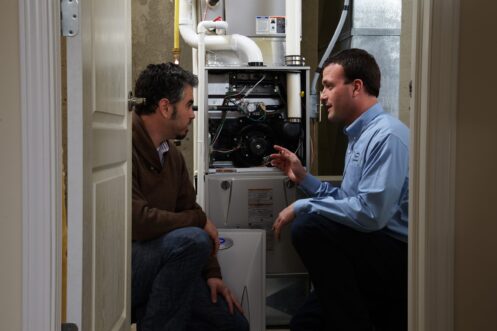
A well-maintained furnace not only provides reliable warmth all winter long but also runs more efficiently, saving you on energy costs. Here are our top five tips to get your furnace winter-ready.
1. Change Your Furnace Filter
One of the simplest yet most impactful maintenance tasks is replacing your furnace filter. Dirty or clogged filters restrict airflow, forcing your furnace to work harder and potentially leading to higher energy bills. We recommend checking and changing your filter every 1-3 months, especially during heavy usage in winter. Clean filters promote better air quality and allow your furnace to operate at peak performance.
2. Clean Around the Furnace Area
It’s essential to keep the area around your furnace clear of dust, debris, and flammable materials. Over time, dust can accumulate in the furnace’s components, which may affect its efficiency. Vacuuming the surrounding area and gently cleaning the furnace’s exterior helps keep everything running smoothly. A clean space around your furnace also ensures safe operation throughout the season.
3. Test Your Thermostat
Your thermostat plays a significant role in maintaining a comfortable home temperature. Before winter hits, test your thermostat to ensure it’s accurately reflecting room temperatures. If it’s not working correctly, consider upgrading to a programmable or smart thermostat, which can save energy by automatically adjusting temperatures based on your schedule.
4. Check for Unusual Sounds and Smells
When you turn on your furnace, listen and smell for anything unusual. Strange sounds like rattling, buzzing, or squeaking may indicate a mechanical issue, while odd smells could signal problems with dust accumulation or even gas leaks. These are warning signs that your furnace may need professional attention to avoid further damage.
5. Schedule a Professional Furnace Tune-Up
Nothing beats a comprehensive maintenance appointment from a qualified technician. During a tune-up, we’ll thoroughly check your furnace for any signs of wear, clean internal components, and ensure everything is operating safely and efficiently. A yearly tune-up extends the lifespan of your furnace and minimizes the risk of unexpected breakdowns during winter.
Ready to ensure a warm, cozy winter? Contact Forge Heating in Huntington, WV, to schedule your furnace maintenance or learn more about our heating services. Our team is here to provide professional, reliable help to keep your home comfortable throughout the coldest season.
Frequently Asked Questions
Why does my furnace smell like burning when I first turn it on?
After months of sitting unused, dust settles on the heat exchanger and burners. When the furnace kicks on for the first time, that dust burns off and creates a brief burning smell. This is normal and should fade within a few hours. If the smell lingers, gets stronger, or smells like burning plastic or electrical wiring, turn off the furnace and call a technician.
What should I do if I smell gas near my furnace?
Treat it as an emergency:
- Leave your home right away with everyone inside.
- Don’t flip light switches, use appliances, or light anything, since sparks can ignite gas.
- Call your gas utility or 911 once you’re outside and a safe distance away.
Don’t go back inside until professionals say it’s safe.
When is the best time to schedule a furnace tune-up?
Early fall is ideal, before you need your heat every day. Scheduling ahead of the first cold snap helps you avoid the rush when HVAC companies get busy, and it gives you time to fix any issues before temperatures drop.
How long does a furnace typically last?
Many furnaces last around 15 to 20 years, though the actual lifespan depends on the model, how often it runs, and how well it’s maintained. If your furnace is approaching that age and needs frequent repairs, it may be more cost-effective to replace it than keep fixing it.
Do I need a carbon monoxide detector if I have a gas furnace?
Yes. A cracked heat exchanger or venting problem can leak carbon monoxide, which you can’t see or smell. Install CO detectors on every level of your home and near sleeping areas. Test them monthly and replace them as the manufacturer recommends.